
Fire Stopping & Compartmentation Surveys
Our surveyors inspect fire stopping and compartmentation across occupied buildings, live construction sites and higher-risk premises.
We combine specialist passive fire protection knowledge with practical experience to deliver thorough compartmentation surveys and detailed, evidence-based reports. Our BlueSky third-party certification for fire stopping provides additional assurance of our competence and commitment to quality and compliance.
Accredited Compartmentation Surveys
Our team carries out detailed inspections and records the findings clearly, helping clients understand identified defects, their priority and the work that may be required.
FIA membership, together with CHAS and SSIP credentials, supports a structured and safety-conscious approach on site. Where powered access is needed, IPAF-trained operatives can assist with inspections in higher or difficult-to-reach areas.





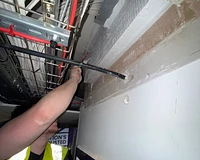
What is a fire stopping and compartmentation survey?
A fire stopping and compartmentation survey is an inspection of a building’s fire-resisting construction and the measures in place to prevent the spread of fire and smoke.
We carry out fire stopping, compartmentation surveys and Type 4 intrusive surveys, depending on the level of investigation required. This can range from visual inspections of accessible areas, to opening up concealed construction to assess hidden fire stopping and compartmentation.
Findings are supported by photographs, locations and detailed reporting, clearly identifying defects, areas of concern and where remedial work is required.
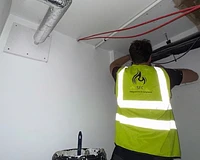
Fire compartmentation compliance
Plenty of survey reports will tell you what is wrong, fewer tell you what to actually do about it.
Every fire stopping inspection that we produce is a detailed report backed by photographic evidence, with a clear picture of each defect, where it is and why it matters. Alongside the photographs you get practical, prioritised recommendations, so you can see exactly what needs doing.
The report also adds to your building’s wider compliance trail, the golden thread of information that owners and ‘Responsible Persons’ of buildings are now expected to keep up to date.
Where Fire Stopping Fails
We know where to look, alongside the usual places where breaches can occur, our surveys include a full review of every aspect within a building's fire compartmentation. Our surveys typically cover:
- Ceiling voids: The gaps where cabling and ductwork run between rooms and floors, a common spot where penetrations are left unsealed once works are completed.
- Service risers: Vertical shafts that carry pipes and cables through several storeys, a single unsealed penetration here can compromise fire separation across multiple floors at once.
- Plant rooms: Pipework and services pass through walls and floors in high concentrations, and the arrangement is often modified repeatedly over a building’s life.
- Roof voids: Compartment walls should continue to the appropriate fire-resisting line, but they can stop short or be breached, allowing fire and smoke to spread through the roof space.
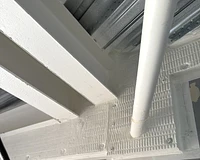
Would you know if your fire stopping had failed?
Compromised fire stopping is rarely obvious, and the warning signs are easy to miss until a survey brings them to light.
Failed fire stopping rarely announces itself. A seal can look sound while a gap behind a pipe or a penetration left open by later trades quietly cancels out the protection. Knowing the tell-tale signs is the difference between catching a problem and missing it.
See the warning signs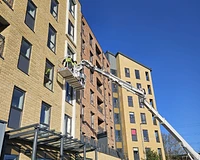
Working safely in occupied buildings
Most of our surveys happen in buildings that stay fully occupied, so we plan the work around the people in them rather than the other way round.
We keep disruption to residents, staff and daily operations as low as the survey allows. Our site staff all have current DBS checks, which is especially important when work takes place in homes, schools and other sensitive occupied environments.
We can also arrange access to awkward or high-level areas. Truck-mounted platforms, towers and spider lifts allow us to inspect risers, roof voids and restricted areas safely, often reducing the need for full scaffolding.
What Your Survey Should Be Measured Against
A compartmentation survey is judged against the fire strategy the building was designed to, the standards its seals were tested to and the duties placed on whoever manages it.
This matters because Article 17 of the Regulatory Reform (Fire Safety) Order 2005 requires fire precautions to be kept in efficient working order. A survey is how the Responsible Person finds out whether that is actually the case, rather than assuming it.
You receive a full report with photographic evidence and clear recommendations for the work needed to bring the building in line with the relevant standards. We are happy to talk you through anything in it that needs clarifying, then provide a quotation and work with you to produce a schedule of works.
It depends on the survey you need. A visual, non-intrusive compartmentation survey involves no opening up and is carried out through a thorough examination of everything the surveyor can see and reach. A Type 4 survey is the most thorough level, where we remove certain sections to inspect the areas hidden behind the surface, and wherever we open up we make good to a high standard once the inspection is complete.
Want to discuss your upcoming survey?
Get in touch to speak to our expert fire stopping team.
Related articles
.webp)
Signs Your Building’s Fire Stopping May Be Compromised
Fire stopping plays a vital role in passive fire protection, sealing gaps and service penetrations to maintain compartmentation. But even high-quality fire stopping can be compromised over time, and often, the signs aren’t obvious until it’s too late.
.webp)
What is Compartmentation and Why Does It Matter?
Compartmentation is one of the most important principles in fire safety – yet it’s often misunderstood or overlooked.
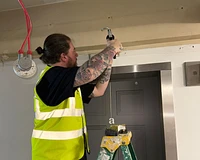
Common Fire Stopping Mistakes and How to Avoid Them
Fire stopping is an essential part of any building’s passive fire protection strategy. When installed correctly, it helps contain fire and smoke within designated compartments, giving occupants time to evacuate safely and protecting the structure. But fire stopping can often be installed incorrectly or is neglected over time.