
Fire Stopping & Compartmentation Installation
Our expert team provides third-party accredited fire stopping and compartmentation installation across commercial, residential and high-risk environments.
We install tested systems with care and precision, helping to maintain effective compartmentation and support fire safety compliance throughout the building.
Accredited Fire Stopping Installation
We provide accredited fire-stopping and compartmentation installation through UKAS-accredited BlueSky Certification.
Alongside our FIA membership and CHAS, SSIP and IPAF credentials, we provide our clients with confidence that work is delivered by a competent team operating to recognised quality and safety standards.





What is fire stopping installation?
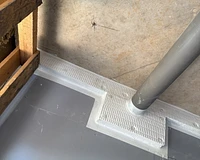
Fire stopping installation is the process of maintaining the fire resistance of walls, floors and other compartment lines and boundaries where openings, joints or service penetrations occur.
Services such as pipes, cables and ducts are often added, altered or replaced throughout a building’s life. Where these pass-through fire-resisting construction, the openings must be correctly protected with a suitable, tested firestopping system to maintain the integrity of the compartment.
We install compliant fire stopping systems around penetrations, joints and other areas where fire and smoke could otherwise spread, helping maintain the building’s intended level of fire protection.
Compartmentation Backed By Expertise
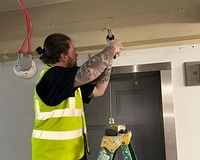
Fire stopping only works as intended when it is installed in the right way for the wall, floor or opening it is protecting.
Before we seal anything, we check what is passing through the compartment line, what the wall or floor is made from and which type of fire-stopping detail is required. A pipe, cable tray, duct or mixed-service opening may each need a different solution.
Our Detailed Approach
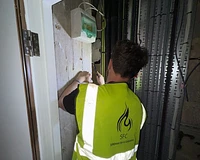
Every installation is considered individually, with products and systems selected for the specific penetration, substrate and required fire performance.
We follow the relevant manufacturer’s tested system details and installation guidance, making sure products are compatible and fitted within their approved application.
This provides a clear, consistent approach and helps ensure the completed work meets the required specification and fire-safety standards.
Common Compartmentation Mistakes
Even well-intentioned installation work can leave a compartment line compromised when the detail is wrong.
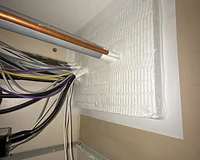
The wrong sealant for the substrate, a batt that does not fully close the void or a collar left off because access is difficult can all affect the performance of the compartment line.
Problems can also arise when products are used outside their tested application or installed differently from the manufacturer’s guidance. This is why we always follow the manufacturer's specific guidelines, giving all of our clients the data sheets for every product we use as part of our work, ensuring everything is compliant and recorded accurately.
Learn about the common mistakes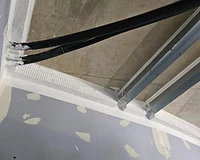
Project: Commercial internal fire stopping
We recently completed internal fire stopping works across a multi-floor development during the construction and fit-out stage.
Our team worked across residential dwellings and communal areas, coordinating with electrical, plumbing and other trades as the project progressed. This involved a range of service penetrations through drywall and concrete, supported by installation records and before-and-after photography.
This shows how we manage fire stopping as an ongoing part of the build, maintaining quality and compliance as site conditions change.
Read moreClear & Accountable Protection
Every aspect of your building’s fire compartmentation should be properly recorded and traceable.
Each penetration we install is photographed and logged with its location, the fire stopping system used and the installation detail. We also provide the relevant product data sheets for your records, creating a clear evidence trail for the completed works.
These records support the building’s Golden Thread and provide an essential reference for future inspections, maintenance or fire stopping works. For developers, main contractors and building owners, this means the fire stopping element of the handover is clearly evidenced and ready to pass on.
The Standards Your Installation Needs To Meet
Fire stopping installation sits inside a clear framework of fire safety law, building regulations, tested systems and manufacturer guidance.
This matters because different duties apply at different stages of a building’s life. Under the Regulatory Reform (Fire Safety) Order 2005, the building’s ‘Responsible Person’ must manage fire risk during occupation, which includes keeping appropriate fire precautions in place - including fire stopping.
We hold UKAS Accredited BlueSky third-party certification, as well as being a member of the Fire Industry Association. We also hold CHAS accreditation under the Safety Schemes in Procurement framework.
Compartmentation is the division of a building into separate fire-resisting sections using walls and floors that resist the spread of fire and smoke. Fire stopping is the sealing of any gap or opening through those walls and floors, such as where pipes, cables and ducts pass through, so the fire resistance of the compartment is maintained.
Yes. We install fire stopping and compartmentation systems on both new build and refurbishment projects. On new builds we seal penetrations as the services are installed, and on refurbishment we also check and reinstate existing seals that have been disturbed by other works.
Yes. We arrange our own access to high and awkward areas using truck-mounted platforms, towers and spider lifts, so risers, ceiling voids and plant rooms get the same standard of installation as anywhere else, usually without the cost and disruption of wrapping a building in scaffolding.
Want to discuss your upcoming installation project?
Speak to our expert fire stopping team.
Related articles
.webp)
What is Compartmentation and Why Does It Matter?
Compartmentation is one of the most important principles in fire safety – yet it’s often misunderstood or overlooked.
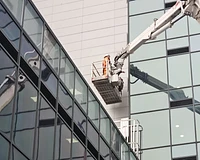
New Buildings Aren’t Always Compliant: Why Fire Stopping and Compartmentation Still Fail
There’s a common assumption in the construction and property industry that new buildings are automatically compliant when it comes to fire safety.