
High risk and industrial fire protection
Some areas of a building carry greater fire risk and present more challenges when fire stopping and compartmentation work is required.
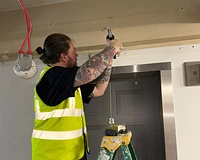
Plant rooms, electrical intake rooms, service risers, energy centres and technical spaces can contain dense services, live equipment, high temperatures and restricted access.
This makes careful planning, correctly specified fire stopping and health and safety site controls particularly important. Our CHAS and SSIP credentials support the safe management of work in these environments, alongside our specialist passive fire protection knowledge and experience.
Accredited Fire Protection in High-Risk Areas
Working in plant rooms, service risers, electrical spaces and other high-risk environments requires careful planning, appropriate site controls and a clear understanding of passive fire protection systems.
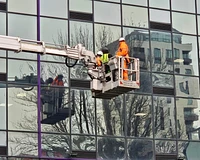
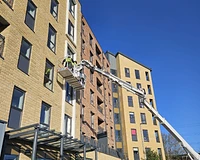
Our BlueSky certification and FIA membership support the technical standards behind our work, while CHAS and SSIP credentials demonstrate our approach to health and safety management. Where access is restricted or work is required at height, IPAF-trained operatives can also support safe access to difficult-to-reach areas.




Where high-risk fire protection is needed
Common areas include:
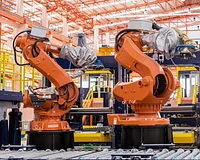
- Plant rooms: Boilers, pumps, generators and pipework can create multiple penetrations through fire-resisting walls and floors.
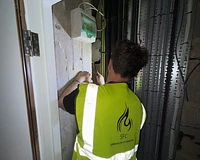
- Electrical intake rooms: Large numbers of cables often pass through compartment walls and floors, sometimes around live equipment.
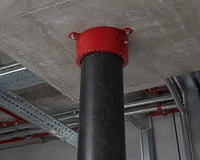
- Service risers: Pipes, cables and ducts can pass through multiple floors, making effective compartmentation essential.
- Energy centres and boiler rooms: Heat, plant and dense services can create demanding conditions for fire stopping systems.
- Server rooms, laboratories and technical spaces: Dense cabling and critical equipment require careful, precise work with minimal disruption to operations.
What makes these areas harder to protect?
The same things that make these areas high-risk also make them difficult to work in.
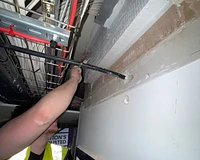
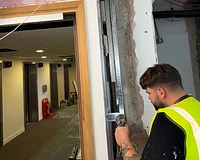
Access can be difficult, with penetrations hidden behind equipment, above ceilings, inside risers or around existing services. Fire stopping can also be more complex where several services pass through the same opening.
The type and size of the services, the surrounding wall or floor construction and the required fire performance all need to be considered when selecting and installing the appropriate system.
Matching The Method To The Hazard
A high-risk area needs an approach shaped around the conditions inside it.
We start by understanding the room, the services passing through it and the risks that need to be managed. A live electrical intake is not approached in the same way as a boiler room. A server room is different again.
Each one affects how we plan access, sequence the work and choose the correct fire stopping system.
High-risk areas are the parts of a building where fire is more likely to start or spread, or where the consequences would be most serious. They typically include plant rooms, electrical intake rooms, service risers, extreme-heat areas such as energy centres, and specialist high-tech spaces such as server rooms and laboratories.
In most cases, yes. We plan the work around live equipment and ongoing operations wherever we can, so that critical areas keep running. Where a short shutdown is unavoidable, we agree to it in advance and keep it as brief as possible.
Yes. All of our site staff hold current DBS checks, which is important for work in hospitals, schools, secure facilities and other sensitive environments where high-risk areas are often found.
Our full range of services
Want to discuss a fire protection project?
Speak to our expert team.
Related articles
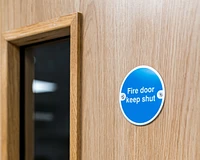
Who Is the ‘Responsible Person’ – and Why It Matters More Than You Think
Fire safety in buildings isn’t just about the systems, inspections, or compliance certificates—it ultimately comes down to one key role: the Responsible Person.
New Buildings Aren’t Always Compliant: Why Fire Stopping and Compartmentation Still Fail
There’s a common assumption in the construction and property industry that new buildings are automatically compliant when it comes to fire safety.
.webp)
Signs Your Building’s Fire Stopping May Be Compromised
Fire stopping plays a vital role in passive fire protection, sealing gaps and service penetrations to maintain compartmentation. But even high-quality fire stopping can be compromised over time, and often, the signs aren’t obvious until it’s too late.