
External wall surveys (EWS1)
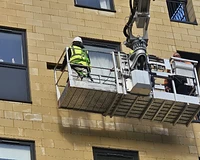
We support EWS1 investigations alongside suitably qualified fire engineers, providing safe access, opening-up works, photographic records and practical assistance throughout the inspection.
Our CHAS and SSIP credentials support our site procedures, with IPAF-trained operatives available for high-level access where required.
Accredited Support for EWS1 Surveys
We assess external wall build-ups on residential and mixed-use buildings, reviewing available records and carrying out targeted intrusive investigations.
Findings are clearly documented to provide the appointed suitably qualified professional with the additional evidence they need to complete the EWS1 assessment. Where the findings identify fire safety requirements, these can be addressed separately through our specialist remediation services, with firestopping works delivered under our BlueSky third-party certification.




What is an external wall survey (EWS1)?
An external wall survey assesses the construction and materials used across a building’s façade to understand how they may affect fire safety.
This can include cladding, insulation, cavity barriers, fixings and the different layers within the wall build-up, as well as fire-stopping and barriers around windows and at floor levels.
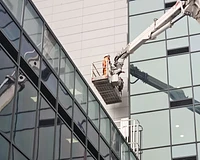
We review available drawings and records, inspect the building and arrange intrusive checks where important information is missing or cannot be relied upon. This helps establish how the external wall system is actually constructed and whether key fire safety measures are present and performing as intended.
The findings give freeholders, managing agents, developers and Responsible Persons a clear understanding of any risks, further investigation or remedial work required.
Our role in the EWS1 process
The quality of an EWS1 assessment depends heavily on the quality of the survey behind it.
The EWS1 form itself is completed by a suitably qualified assessor, usually a chartered fire engineer, who reaches a judgement on the building's external wall system. Our job is to give that assessment something solid to be based on, by carrying out the physical investigation and gathering the detailed construction information the assessor needs.
We work closely with the appointed fire engineer throughout the investigation, ensuring the right areas are examined and the information gathered is relevant to their assessment. Where an assessor has not yet been appointed, we can also help connect you with a suitably qualified professional to complete the EWS1 assessment.
From heritage façades to high-rise developments
External wall surveys are rarely one-size, and tall or sensitive buildings bring their own challenges.
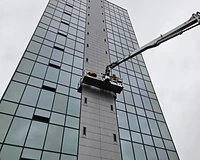
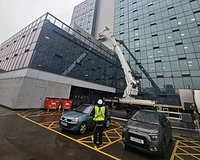
We work on buildings of different ages, heights and construction types, from modern apartment blocks to heritage façades and taller residential buildings. Each one needs a careful approach. A listed or heritage building may require sensitive opening up to protect original fabric, while a high-rise building brings the challenge of safe access at height.
What happens after a failed EWS1?
A poor EWS1 result can stall sales, unsettle leaseholders and leave a building feeling stuck.
The rating marks where the external wall falls short, and a clear remediation route can take it from there to a compliant outcome.
Read what happens next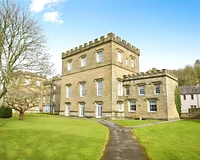
Recent Project: Historic Building EWS
We know that older buildings need a different level of care when external wall investigations are required.
In this case, we were asked to support an EWS assessment on a historic residential building where the external wall construction needed to be physically verified. Even where drawings or records are available, the information may not accurately reflect a building, so physical investigation is an important part of establishing what is actually present.
We planned the investigation around the Fire Engineer’s requirements, using targeted internal core drilling rather than opening up large areas of the building.
View projectThe Assessment Behind The EWS1 Form
An EWS1 form records the professional conclusion reached following an assessment, but it does not replace the investigation needed to understand the external wall itself.
PAS 9980:2022 provides a recognised approach for assessing the fire risk presented by external wall construction. Following that process gives freeholders, managing agents and those responsible for the building a properly evidenced position from which to plan further investigation, manage risk or commission remedial work.
No not every building requires an EWS, the Building Safety Act specifies: Buildings over 18 metres tall with external wall systems. Buildings under 18 metres where materials raise fire safety concerns. Properties where lenders or surveyors require confirmation of fire safety compliance. We have however found a growing request of EWS1 surveys requested by Insurers, on buildings of varying heights.
There is no need to panic. If the investigation identifies problems, we explain clearly what has been found and set out your options for putting it right to support the safety and compliance of the building. We can then provide cost quotations and indicative timescales for any remediation work required.
A non-intrusive survey relies on visual inspection and the building's existing records, without opening anything up. An intrusive survey involves opening up sections of the external wall to see and sample what is actually inside. Most buildings need some intrusive investigation to confirm what the wall is really made of, since the original drawings are not always accurate.
PAS 9980 is the published code of practice for assessing the fire risk of a building's external wall construction. It sets out a consistent method for appraising external walls, and our investigations are carried out to give an assessor the evidence a PAS 9980 appraisal relies on.
Want to discuss your EWS1 survey?
Speak to our expert team.
Related articles
Who Is the ‘Responsible Person’ – and Why It Matters More Than You Think
Fire safety in buildings isn’t just about the systems, inspections, or compliance certificates—it ultimately comes down to one key role: the Responsible Person.
Why Fire Safety Maintenance Is Not “One and Done”
When fire safety works are completed- whether that’s fire stopping remediation, compartmentation upgrades, or external wall system (EWS) works- it can be tempting to view the building as fully compliant and finished.