
Fire Stopping & Compartmentation Remediation
We repair defective, damaged or missing fire stopping, working from survey findings or a defect schedule you already hold.
As Fire Industry Association members with BlueSky certification behind our passive fire protection work, we complete remedial installations to recognised standards and hand over the documentation to evidence it.
Certified Fire Stopping & Compartmentation Remediation
Remedial fire-stopping is completed within the scope of our third-party BlueSky certification, covering the correction of defective, damaged or incomplete fire stopping.
Our FIA membership supports our technical knowledge, while CHAS and SSIP reflect the controls used to manage health and safety. IPAF-trained personnel are also available where remediation requires powered access.




What is fire stopping remediation?
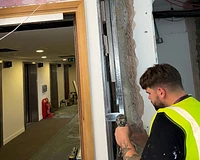
Fire stopping and compartmentation remediation is corrective work carried out where existing seals have failed or were never installed to the required standard.
Defects are usually picked up by a survey, then put right using products suited to each substrate and penetration type. Each repair is documented, giving you evidence that the compartment lines have been restored and that the building matches its fire strategy on paper.
From survey to solution
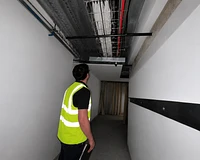
When the same specialist team carries out both the survey and remediation, there is continuity from the initial findings through to the completed repair.
This means defects can be understood in context and remedial works can be carried out accurately, without losing important information between different contractors.
By providing both survey and remediation services, we can identify issues, recommend the appropriate solution and carry out the necessary works, with one team responsible from inspection through to completion.
Managing remediation works
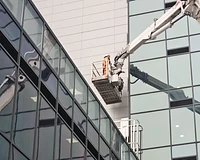
Large remediation projects do not always need to happen all at once. In occupied buildings, works often need to be carefully planned and phased to suit the building and those using it.
Where appropriate, we can phase remedial works so that the most urgent areas are addressed first, with remaining works completed in a planned sequence. Phasing can also help clients manage budgets and spread costs over an agreed programme, while reducing disruption for residents, staff and visitors.
We work with clients to develop a practical approach that keeps priorities clear and progress manageable from start to finish.
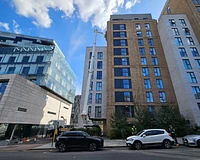
Evidence for the building’s Golden Thread
Once the work is complete, you are left with a clear record of what was found, what was repaired and how the work was carried out.
Each defect is photographed before and after remediation, with every completed repair logged against its precise location.
We also record the fire stopping system used and provide you with the relevant product data sheets for your records, giving you a traceable link between the original defect, the remedial work and the completed installation.
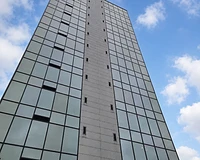
Recent Project: Multi-storey Office Building
Often, our role begins after the inspection, when the question becomes what needs fixing first and how to get it done.
In this case, the client had a Fire Engineer’s schedule of Priority 1 compartmentation defects in a multi-storey office building. We took that schedule and turned it into a phased programme of works, removing unsuitable fire stopping and reinstating protection around service penetrations.
View office projectThe Rules That Govern Your Remedial Work
Remedial fire stopping has to satisfy the same tested standards as a new installation, with no allowance made for the fact that someone else got it wrong first.
Seals are classified under BS EN 13501-2 following testing to standards such as BS EN 1366-3, and each product carries a field of application setting out where it may be used. Work outside that scope has no evidence behind it, whatever the original defect looked like.
Where a previous repair was carried out with the wrong materials or detail, such as expanding foam or an untested product, we remove it and replace it with a third-party tested system suited to that location. A repair that has not been tested for the situation it is used in cannot be relied on, however solid it looks.
You need a clear picture of the defects before remediation can be costed and prioritised, which usually comes from a compartmentation survey or a Fire Engineer's defect schedule. We can carry out the survey ourselves or work from one you already hold.
They can, we will highlight main areas of concern and ensure you are aware of the areas we feel need to be dealt with as priority. In some cases, if a Fire Engineer is involved with the project, they may also advise what areas must be dealt with first. We will take into consideration any sections or areas that may be problematic for building usage etc, but our main priority is to ensure safety for all occupants and the building itself
We operate to the highest health and safety standards to ensure the safety of residents, the public and our operatives on site. Our teams work efficiently and will keep noise and disruption to as minimal level as is possible for the remediations.
Want to discuss your upcoming remediation project?
Get in touch to speak to our expert fire stopping team.
Related articles
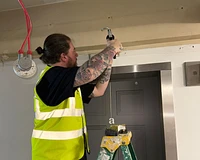
Common Fire Stopping Mistakes and How to Avoid Them
Fire stopping is an essential part of any building’s passive fire protection strategy. When installed correctly, it helps contain fire and smoke within designated compartments, giving occupants time to evacuate safely and protecting the structure. But fire stopping can often be installed incorrectly or is neglected over time.
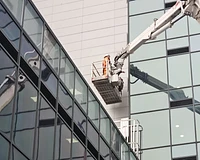
New Buildings Aren’t Always Compliant: Why Fire Stopping and Compartmentation Still Fail
There’s a common assumption in the construction and property industry that new buildings are automatically compliant when it comes to fire safety.