
Passive fire protection for residential buildings
Effective passive fire protection is a fundamental part of fire safety in multi-occupied residential buildings, where compartmentation helps contain fire and smoke and protect escape routes.
We carry out fire stopping, compartmentation surveys and remedial works, alongside fire barrier, fire collar and fire door surveys. Our work covers blocks of flats, social housing and other residential buildings, including those that remain occupied throughout the works.
Accredited Passive Fire Protection for Residential Buildings
Residential fire protection work requires careful planning, particularly in occupied buildings where maintaining safety, access and minimal disruption for residents is essential.
Our BlueSky certification and FIA membership support the technical standards behind our passive fire protection work, while CHAS and SSIP credentials demonstrate our structured approach to health and safety. Together, these credentials support the delivery of compliant, well-managed work across residential properties and developments.





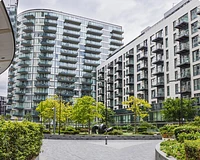
Challenging areas within residential buildings
Fire protection issues are often found in areas that are rarely seen or accessed. Common problem areas include:
- Service risers: Pipes, cables and ducts can pass through multiple floors, with each penetration requiring suitable fire stopping to maintain compartmentation.
- Meter cupboards: Gas, electrical and other services can create small or awkward penetrations that may have been altered over time.
- Loft and roof voids: In lower-rise blocks and converted buildings, compartment walls may not extend fully into roof spaces, creating potential routes for fire and smoke.
- Flat entrance doors: These doors form part of the separation between individual homes and shared escape routes, making the condition of the door, frame, seals, closers and gaps important.
- Communal areas: Corridors, stairwells, cupboards and service spaces can contain penetrations, doors and junctions that all need to work together to maintain fire protection.
- Legacy alterations: Older buildings can contain years of added cables, relocated services, previous repairs and unsealed openings that have compromised the original compartmentation.

Working considerately in occupied homes
Working in an occupied residential building requires careful planning and consideration for the people living there.
We plan works around residents, agreeing access arrangements, keeping communal areas and escape routes clear, and managing noise, dust and disruption wherever possible. Clear communication helps residents understand when work is taking place and what to expect.
Our site teams are DBS checked, providing additional reassurance when our work takes us into individual homes and shared residential areas.
.webp)
EWS investigation in an occupied residential building
Residential buildings often need careful investigation before anyone can understand the real fire risk.
On this project, we were brought in to support an EWS assessment at a historic residential building in the North West. The Fire Engineer needed clear evidence of the external wall build-up, but the building was occupied and had heritage value, so the work had to be handled carefully.
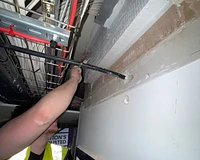
We used targeted internal core drilling across selected locations, gathering the information needed without opening up more of the building than necessary. Our work helped confirm the construction, protect the fabric of the building and minimise disruption for residents.
Read morePractical support in a changing regulatory environment
Few areas of fire safety have changed as much, or as fast, as the rules for residential buildings.
Residential fire safety has changed significantly in recent years, with greater focus on accountability, evidence and ongoing building management.
The Fire Safety Act 2021 clarified that flat entrance doors, external walls and the structure of multi-occupied residential buildings sit within the scope of the Fire Safety Order. In England, the Fire Safety (England) Regulations 2022 also introduced specific duties around fire door information and checks in multi-occupied residential buildings.
For higher-risk buildings in England, the Building Safety Act 2022 places further emphasis on building safety information, accountability and the records that support decisions across the life of the building.
We work across blocks of flats, social housing, converted houses and other multi-occupied residential buildings, from low-rise blocks to high-rise towers. The work ranges from new fire stopping and compartmentation to surveys and the remediation of long-standing defects.
Older buildings accumulate problems over time, as services are added or moved without re-sealing the openings, as past repairs fall short, and as original standards are overtaken by what we expect today. These legacy defects are usually hidden in risers, lofts and meter cupboards, which is why a survey is the only reliable way to find them.
Our full range of services
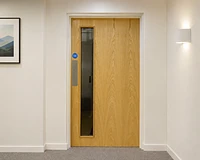
Want to discuss a fire protection project?
Speak to our expert team.
Related articles
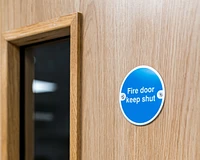
Who Is the ‘Responsible Person’ – and Why It Matters More Than You Think
Fire safety in buildings isn’t just about the systems, inspections, or compliance certificates—it ultimately comes down to one key role: the Responsible Person.
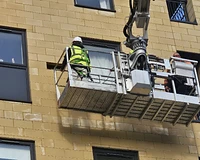
Life After a Failed EWS1: Common Remedial Works and What They Actually Involve
A failed EWS1 assessment can feel like a major setback for building owners, managing agents, and residents alike. Suddenly, concerns around safety, compliance, funding, and timelines all come sharply into focus.
.webp)
Signs Your Building’s Fire Stopping May Be Compromised
Fire stopping plays a vital role in passive fire protection, sealing gaps and service penetrations to maintain compartmentation. But even high-quality fire stopping can be compromised over time, and often, the signs aren’t obvious until it’s too late.